



Carbon Taxes Are a Blunt Instrument for a Precise Problem
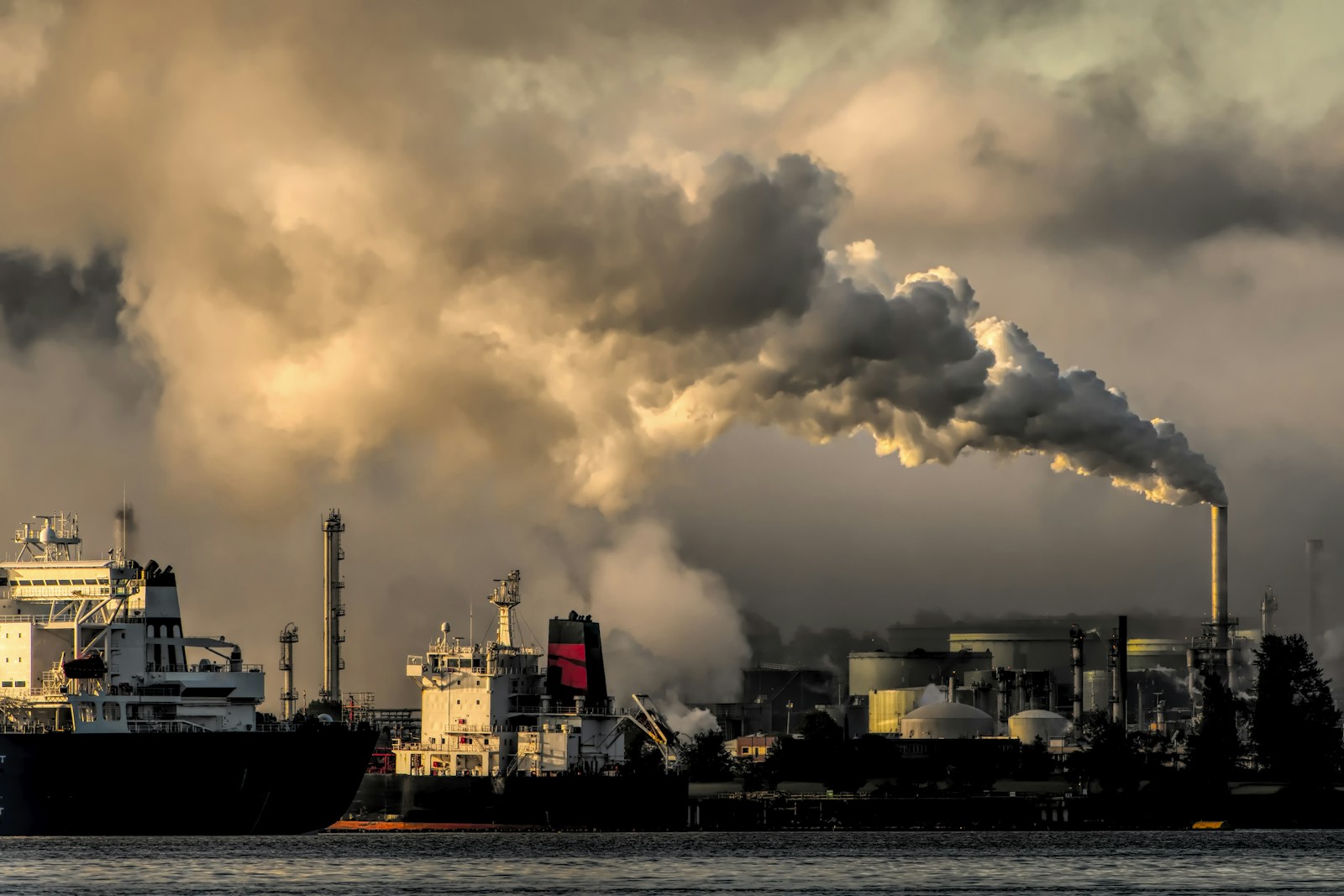
The carbon tax has become the centrepiece of Canada's climate policy—and its most politically divisive issue. Supporters argue it is the most economically efficient mechanism for reducing emissions. Critics call it a regressive burden on working families and resource-dependent communities.
Both sides are partially right. And both sides are missing the point.
The Efficiency Argument
In theory, a carbon price works by internalizing the cost of emissions, making carbon-intensive activities more expensive and cleaner alternatives more competitive. Economists overwhelmingly support this approach because it allows the market to find the lowest-cost abatement opportunities rather than relying on government to pick winners.
In practice, the picture is more complicated. Canada's economy is not a single, uniform market. It is a patchwork of regional economies with vastly different emission profiles, energy sources, and economic structures. A carbon price that is appropriate for an urban commuter in Toronto may be ruinous for a grain farmer in Saskatchewan who has no viable alternative to diesel.
The Case for Precision
What we need is not the abandonment of carbon pricing but its evolution. Resource-specific policies—tailored to the emission profiles and economic realities of individual sectors—can achieve greater reductions with less economic disruption.
Norway's approach to its offshore oil sector is instructive. Rather than relying solely on a carbon price, Norway combines a sector-specific carbon tax with direct regulation, technology mandates, and public investment in carbon capture and storage. The result is an offshore oil industry with per-barrel emissions roughly 40% below the global average.
Canada could adopt a similar approach for its highest-emitting sectors: oil sands, cement, steel, and agriculture. Each requires a different combination of price signals, regulation, technology support, and transition funding. A single, economy-wide carbon price cannot provide that nuance.
Carbon pricing has a role to play in Canada's climate strategy. But it should be one tool among many—not the entire toolbox. We need resource-specific solutions, not broad mandates.
Discussion
JOIN THE INNER CIRCLE
How should BC manage its old-growth forests to balance economy and ecology?